
The Origins of Singapore’s Three Most Common Chinese Surnames
(Part 1 of the “Origins Behind Chinese Surnames” series)
Every name carries a story — one that connects us to our ancestors, our heritage, and our shared past.
This article marks Part One of our new series exploring the origins of common surnames in Singapore, starting with those most familiar to the local Chinese community.
In this first instalment, we look at the three names you’ll encounter everywhere from school registers to shop signs: Tan (陈), Lim (林), and Lee (李).
Each has roots that stretch back thousands of years to ancient China, yet their journey to Singapore tells a story of migration, resilience, and cultural pride.
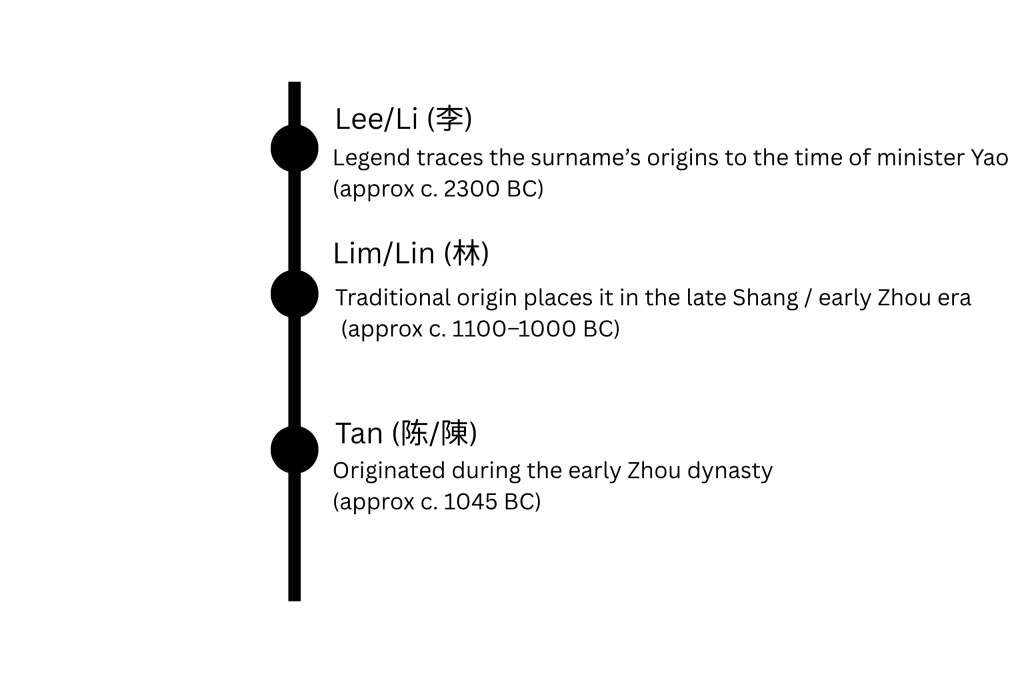
Let’s discover where these names began, what they represent, and the remarkable people who have carried them through history.
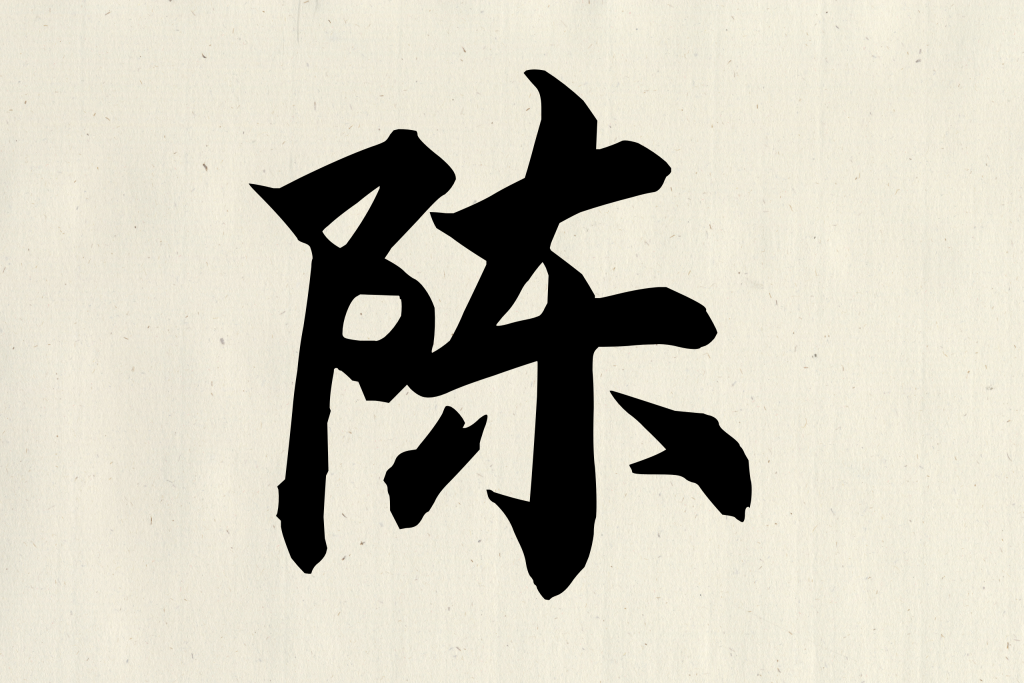
Tan 陈 (Chén)
Origins
The surname Tan traces back over 3,000 years to the ancient State of Chen (陈国) in what is now Henan Province, China.
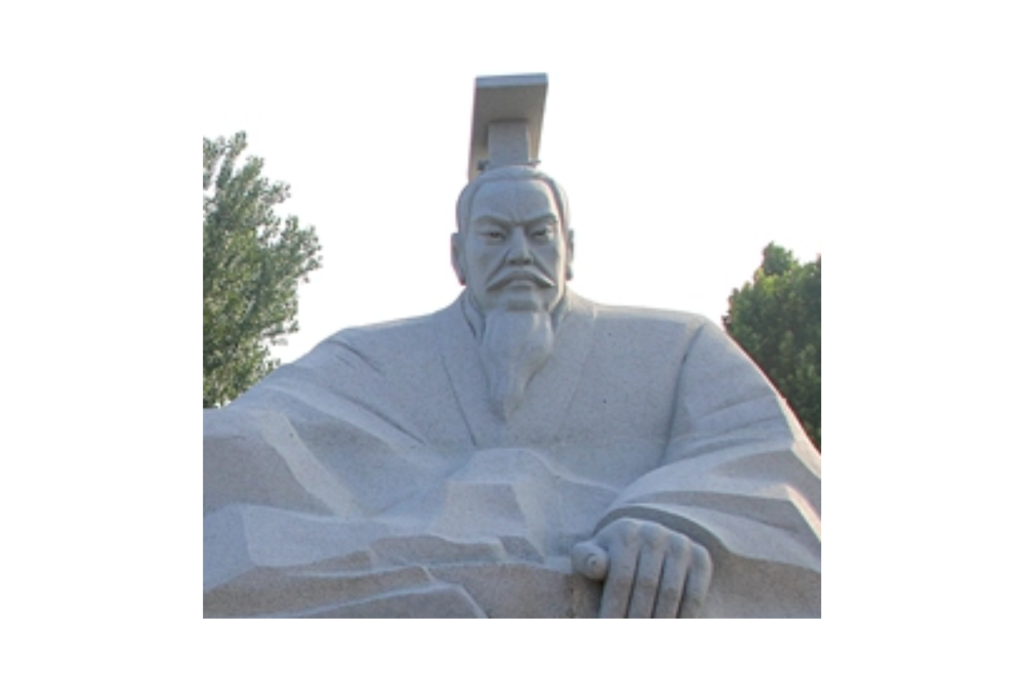
Its founding ruler, Duke Hu of Chen(陈胡公), was said to be a descendant of the legendary Emperor Shun. His descendants took the name of the state, “Chen”, as their family name.
When Hokkien and Teochew migrants moved south from Fujian and Guangdong to Southeast Asia, they brought the name along — pronounced as “Tan” in their dialects.
Interesting Facts
- Tan is the most common Chinese surname in Singapore, held by roughly 1 in 10 Chinese Singaporeans.
- The character 陈 means “to display” or “to arrange”, symbolising order and continuity — fitting for family lineages that stretch back millennia.
Famous Person: Tan Tock Seng (陈笃生)
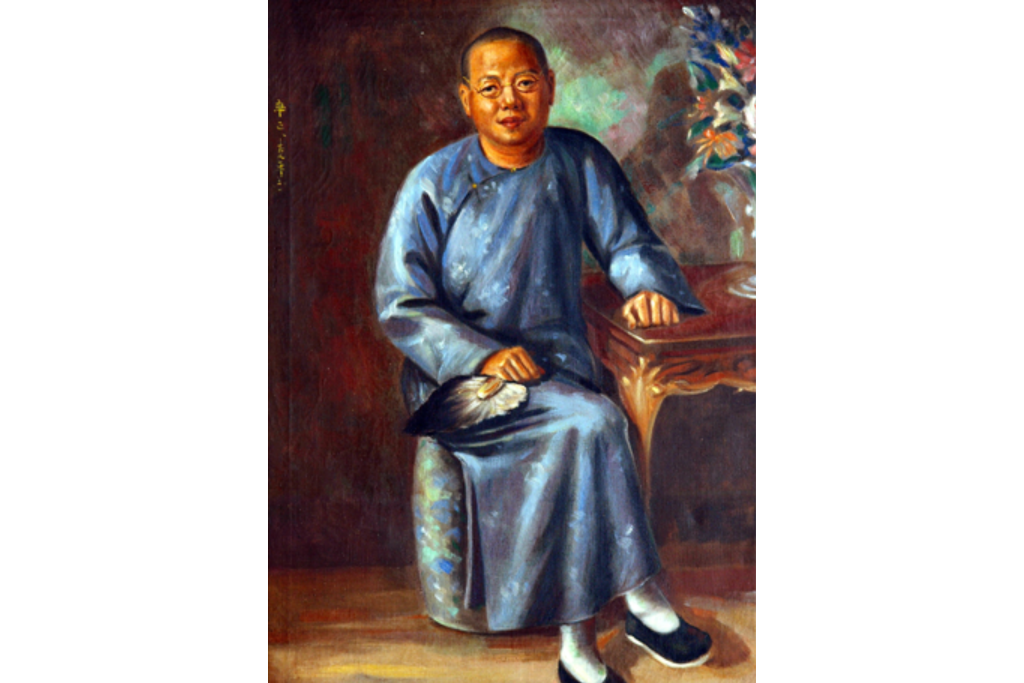
Businessman, philanthropist, pioneer (1798–1850)
Tan Tock Seng arrived in Singapore as part of the earliest waves of Chinese migrants, during a time when the island was still a developing trading port. Without formal education or privilege, he built his livelihood from scratch — starting as a humble vegetable seller before becoming one of the first community leaders and philanthropists in early colonial Singapore.
Beyond his business success, what made Tan Tock Seng unforgettable was his heart for the vulnerable. He donated large sums to build a hospital for the poor, regardless of race or religion — a rare vision of inclusivity in the 1800s. That hospital later became Tan Tock Seng Hospital, one of Singapore’s oldest and most important healthcare institutions.
His spirit lived on long after his passing — during both SARS and COVID-19, it was staff from Tan Tock Seng Hospital who stood at the front lines. In many ways, his legacy still protects the people of Singapore today — nearly two centuries later.
Lim 林 (Lín)

Origins
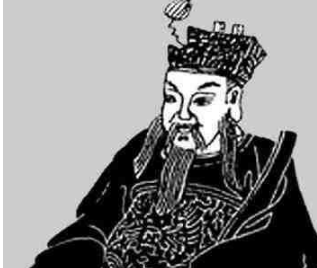
The surname Lim means “forest” — written as two trees (木) side by side.
According to legend, it began with Bi Gonggao(毕公高), a noble descendant of King Zhou of the Shang dynasty, who settled in a region surrounded by forests and adopted the character 林 as his clan name.
Hokkien and Teochew settlers later carried the surname across the seas, where it became Lim in dialect.
Interesting Facts
- The character 林 symbolises growth, harmony, and prosperity — qualities valued in Chinese culture.
- Many early Lim families in Singapore trace their roots to Fujian Province, especially the cities of Quanzhou and Zhangzhou, which supplied much of Singapore’s early Chinese migration.
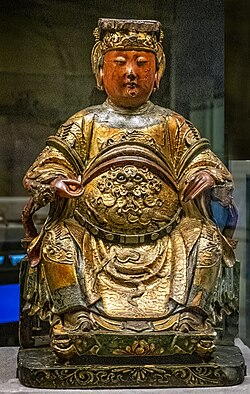
One fascinating cultural connection to the Lim (林) surname is the story of Mazu (妈祖), the Chinese sea goddess widely worshipped across coastal southern China and Southeast Asia. Mazu was born as Lin Moniang (林默娘) around 960 AD during the Song Dynasty, making her one of the most famous historical figures with the Lin/Lim surname. According to legend, she possessed extraordinary spiritual intuition and was known for rescuing sailors and fishermen during dangerous storms. As many early Chinese migrants in Singapore were Hokkien and came from Fujian — the same region where Mazu’s worship began — her legacy remains deeply woven into the cultural heritage of Singaporean Chinese communities. Temples such as Thian Hock Keng (天福宫) in Singapore were built in her honour, reflecting how her influence travelled with migrants across the seas she was believed to protect.
Famous Person: Lim Bo Seng (林谋盛)
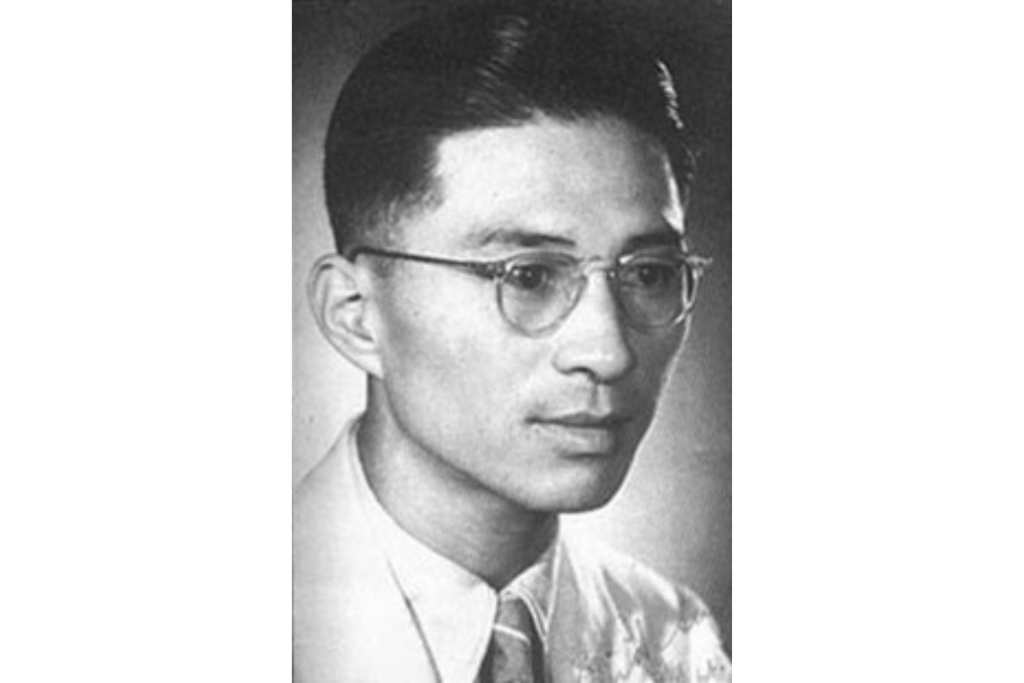
War hero, resistance leader (1909–1944)
Lim Bo Seng’s story is one of extraordinary courage and unwavering loyalty. Born in Fujian and raised in Singapore, he was already an established businessman and community leader before World War II. But when the Japanese invaded, he set aside comfort, business, and personal safety — choosing to fight for freedom.
As a key figure in Force 136, a resistance group organised with the British Special Operations Executive, Lim Bo Seng played a crucial role in coordinating intelligence and guerrilla operations in Malaya. He helped train volunteers, build secret communication routes, and resist occupation at a time when many feared speaking out.
Arrested in 1944, he refused to betray his comrades despite severe torture. His final act was silence — protecting others and preserving Singapore’s hope for liberation.
Today, Lim Bo Seng is honoured as a national hero, symbolising bravery, sacrifice, and the belief that freedom is worth defending. His grave at MacRitchie Reservoir remains a solemn reminder of the price paid for peace.
Lee 李 (Lǐ)
Origins
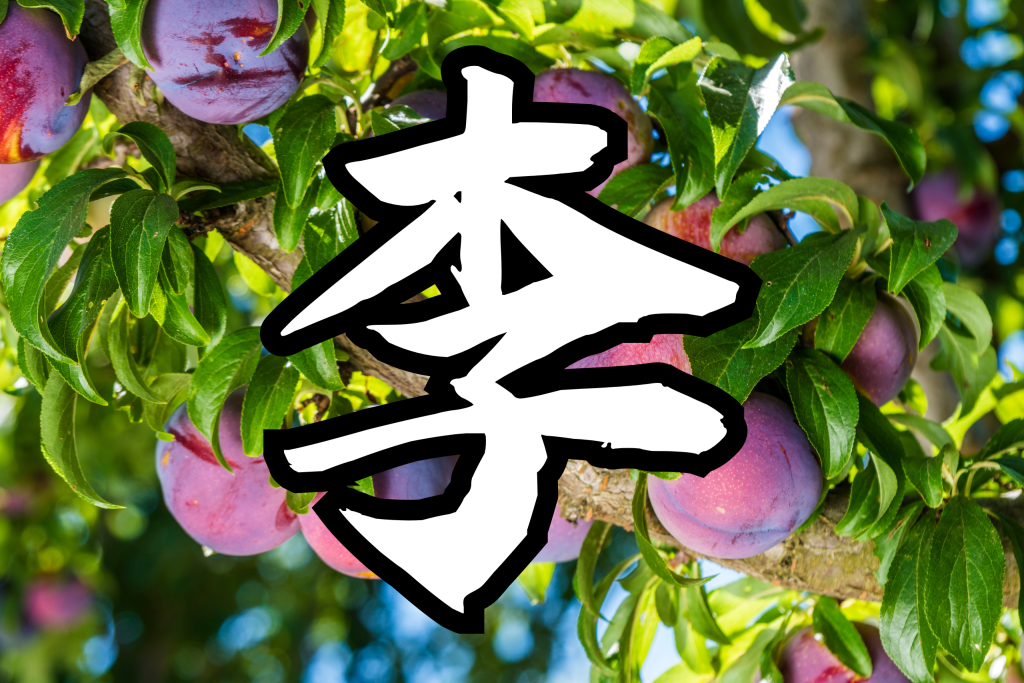
Lee (李) literally means “plum tree”, a symbol of perseverance and renewal in Chinese culture.
It is one of China’s oldest surnames, with roots said to trace back to a minister named Gao Yao, whose descendants later changed their name to 李 after surviving on wild plums during exile.
The name spread widely through the Tang dynasty, when the imperial family also bore the surname Li.
Interesting Facts
- Lee or Li is among the top five most common surnames in the world, shared by over 100 million people.
- The name’s popularity in Singapore reflects both Mandarin and dialect influences — older generations use “Lee”, while newer ICs often show “Li” under Hanyu Pinyin.
Famous Person: Lee Kuan Yew (李光耀)
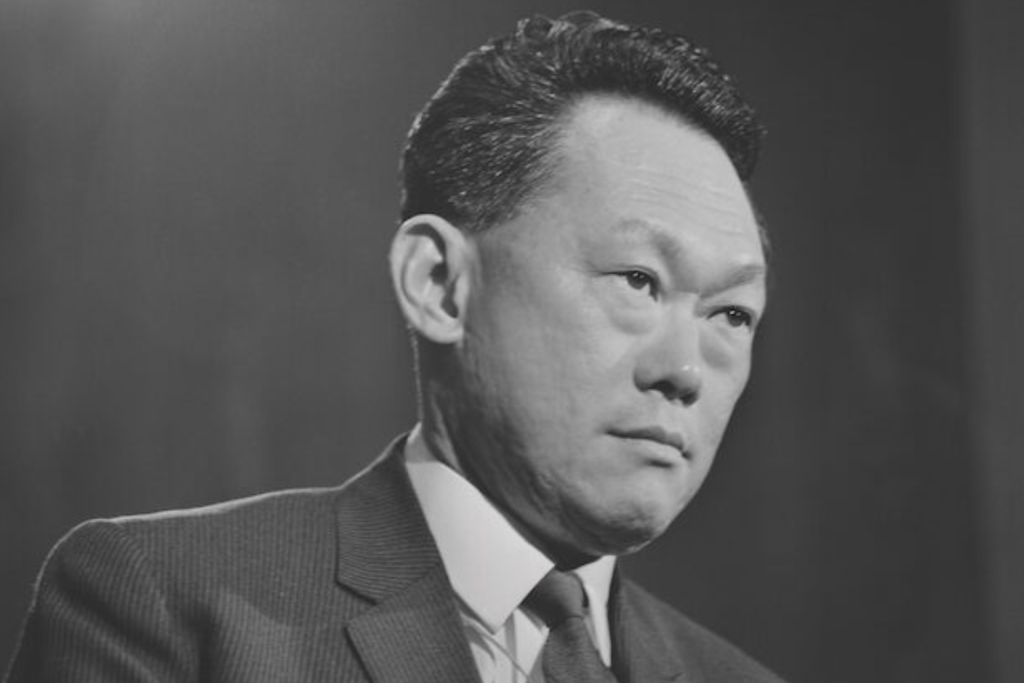
Founding father, nation-builder, Singapore’s first Prime Minister (1923–2015)
Few surnames in Singapore evoke as much recognition as Lee. And among them, Lee Kuan Yew stands tallest — not just as a political leader, but as the visionary who shaped modern Singapore.
When Singapore became independent in 1965, the young nation had no natural resources, no established identity, and no guarantee of survival. Many believed that the country was too small to succeed. Lee Kuan Yew disagreed. With determination, strategic alliances, and an unshakeable belief in meritocracy and discipline, he led Singapore through industrialisation, education reform, multicultural policy-making, and housing development.
The results speak for themselves:
- One of the world’s most efficient governments
- A global economy built on talent and innovation
- A society where different races and religions live side by side peacefully
- A world-class city that grew from swamp, hardship, and uncertainty
Lee Kuan Yew’s legacy is seen in every MRT line, every HDB estate, every first-class classroom, every tree planted across the island. The Singapore we know today is shaped by his unwavering commitment to the idea that a small nation can be great if its people are united, resilient, and forward-looking.
A Shared Heritage
Though Tan, Lim, and Lee look simple on paper, each carries centuries of history, migration, and adaptation.
Their varied spellings — Tan vs Chen, Lim vs Lin, Lee vs Li — reflect the rich tapestry of dialects that formed Singapore’s Chinese identity.
Behind every surname lies a family story that travelled oceans, survived empires, and found a new home on this island.
Stay tuned for Part Two of our “Stories Behind Chinese Surnames” series — where we’ll explore the origins of other familiar names.