
Chinese New Year Taboos: What Not to Do (And Why)
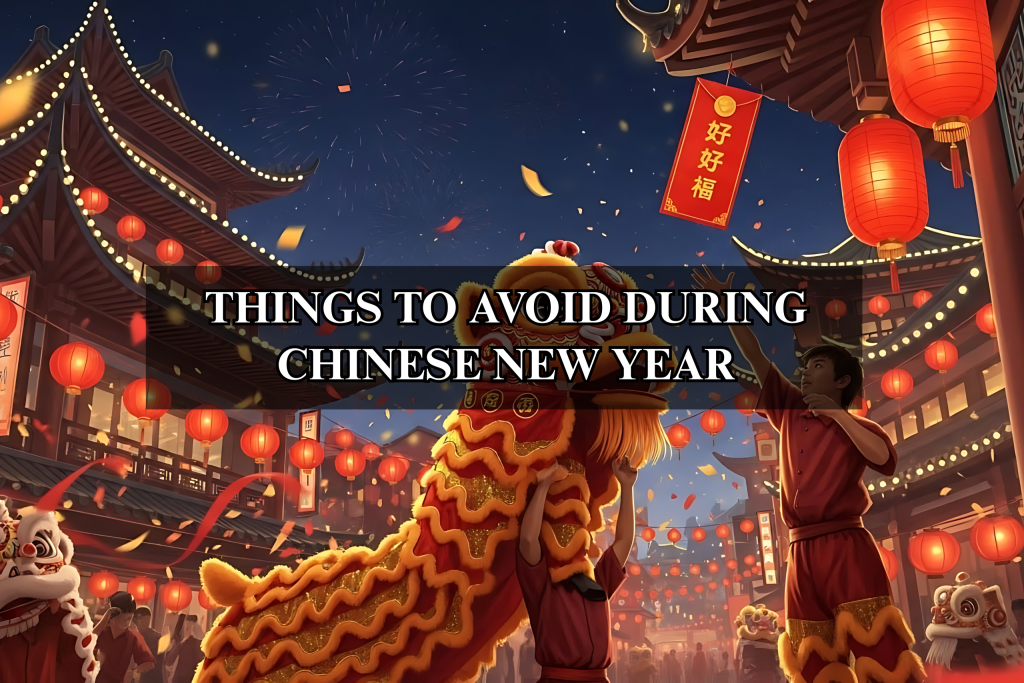
Chinese New Year, also known as the Spring Festival (春节, chūn jié), is the most important celebration in the Chinese lunar calendar. Rooted in centuries of belief in luck, balance, and symbolism, the festival places just as much emphasis on what should be avoided as on what should be done. These taboos, passed down through generations, are meant to protect good fortune, encourage harmony, and set a positive tone for the year ahead.
While not everyone observes every rule strictly today, many of these customs remain culturally significant and are still widely recognised across Chinese communities.
1. Avoid Sweeping or Taking Out the Trash on New Year’s Day

Sweeping, cleaning, or taking out rubbish on the first day of Chinese New Year is traditionally avoided, as it is believed to symbolise sweeping away newly arrived good luck and wealth. For this reason, households usually complete thorough cleaning before the festival begins, then put brooms and dustpans away once the new year starts.
2. Do Not Use Sharp Objects

Using knives, scissors, needles, or other sharp objects during the early days of the new year is considered inauspicious. Sharp tools are believed to cut off good fortune or invite conflict. Haircuts are also traditionally avoided, as the word for hair (发, fà) sounds like the word for wealth (发, fā), and cutting it symbolises cutting away prosperity.
3. Avoid Washing Hair or Clothes

In traditional belief, water represents wealth. Washing clothes or hair on the first few days of the new year is thought to wash away good fortune. Some customs also associate these days with the Water God, making washing activities especially discouraged during this period.
4. Avoid Negative or Unlucky Words
Words spoken during Chinese New Year are believed to influence the year ahead. Negative terms related to death, sickness, loss, or poverty are avoided, along with unlucky homophones. The number four (四, sì), which sounds like “death,” is particularly avoided. Conversations are encouraged to remain positive and hopeful.
5. Do Not Wear Black or White
Black and white are traditionally associated with mourning and funerals in Chinese culture. Wearing these colours during Chinese New Year is considered inappropriate, as the festival is meant to celebrate joy, renewal, and good fortune. Bright colours, especially red, are preferred.
6. Avoid Breaking Objects

Breaking bowls, plates, mirrors, or other household items is seen as a sign of broken fortune or disrupted harmony. If something accidentally breaks, people may quickly say auspicious phrases such as “岁岁平安” (suì suì píng ān, meaning peace year after year) to neutralise the bad omen.
8. Do Not Eat Porridge or Simple Foods for Breakfast
Eating porridge on the morning of Chinese New Year is discouraged, as porridge was historically associated with poverty. Starting the year with simple or leftover foods is believed to symbolise financial hardship, so families prepare special festive dishes instead.
9. Avoid Lending or Borrowing Money

Lending or borrowing money during Chinese New Year is believed to result in financial difficulties throughout the year. Traditionally, debts should be settled before New Year’s Eve so the new year can begin without financial burdens.
10. Avoid Crying, Arguing, or Quarrelling
Emotional harmony is considered essential at the start of the year. Crying, arguing, or getting into conflicts on the first day of Chinese New Year is believed to bring ongoing disputes or sadness throughout the year. Many families therefore make an effort to maintain peace and positivity during this period.
Why These Taboos Still Matter
Although many Chinese New Year taboos may seem superstitious today, they reflect deeper cultural values centred on harmony, optimism, and respect for tradition. By avoiding negative actions and words, people symbolically protect their hopes for prosperity, good health, and strong relationships in the year ahead, even when practiced lightly or symbolically.