
The Story Behind Chinese Names Part 4: Wu (伍), Yang (杨) & He (何)
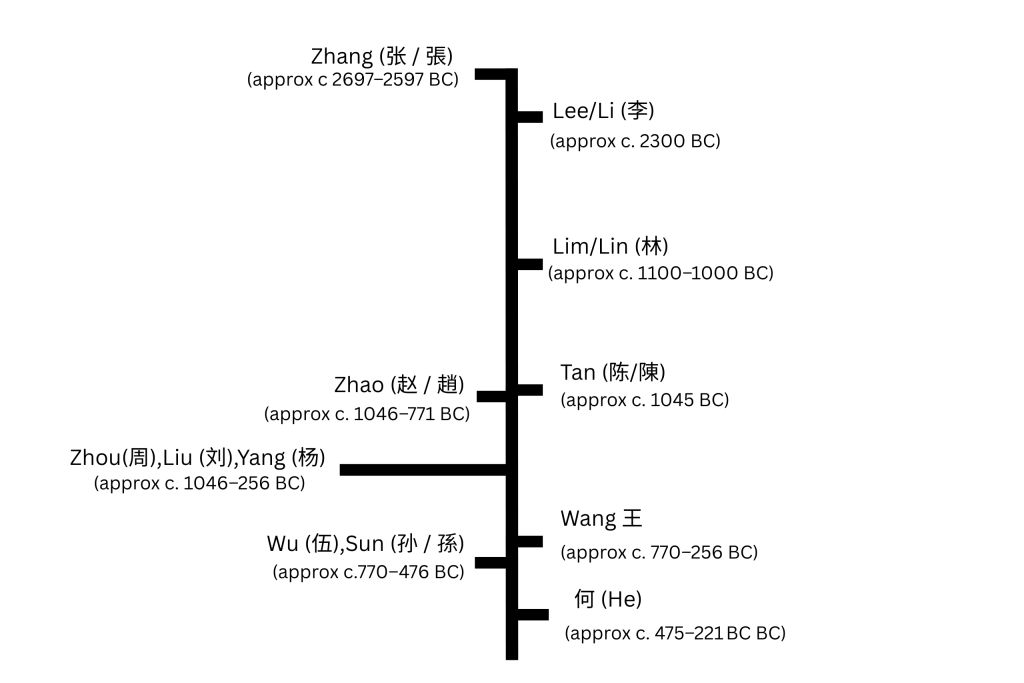
In earlier parts of this series, we explored surnames shaped by emperors, dynasties, and migration.
Part 4 turns to three surnames whose stories are marked by loyalty, reform, and intellectual legacy: Wu (伍), Yang (杨), and He (何).
Though less commonly discussed together, these names reflect the complexity of Chinese history from political intrigue and warfare to philosophical thought that continues to influence Chinese culture today.
Let’s explore where these surnames came from, what makes them distinctive, and the historical figures who gave them lasting significance.
Wu 伍 (Wǔ)
Origins
The surname Wu (伍) has origins dating back to early Chinese clan and military structures. The character 伍 originally referred to a unit of five soldiers, reflecting its association with organisation, discipline, and service. Over time, it became established as a hereditary surname, particularly during the Spring and Autumn period (770–476 BC).
Although 伍 (Wu) is less common than 吴 (Wu), it is historically significant and firmly recorded in classical texts, especially in connection with military officials and statesmen.
Interesting Facts
- The character 伍 is closely linked to ancient military systems, giving the surname strong associations with duty and loyalty.
- Despite its rarity today, the surname gained lasting recognition through one legendary historical figure
Famous Person: Wu Zixu (伍子胥)
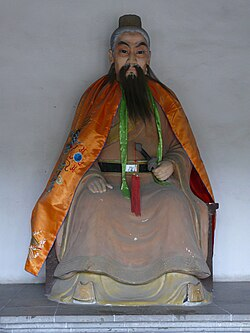
Wu Zixu was a celebrated military general and strategist during the Spring and Autumn period. Born into a noble family in the State of Chu, he fled after court intrigue led to his father’s and brother’s execution. Eventually finding refuge in the State of Wu, Wu Zixu became a key adviser and commander, helping strengthen the Wu kingdom’s military and political position in the region. His life story marked by loyalty, resilience, and strategic insight was recorded in the Records of the Grand Historian and became part of Chinese cultural memory.
Wu Zixu’s story did not fade with time. Instead, it grew into legend. In eastern China, especially in the lower Yangtze region, he came to be worshipped as Taoshen (濤神) “God of the Waves”. He was believed to have power over water and the tides, especially the tidal bore of the Qiantang River near Hangzhou, and became venerated in local popular religion and Taoist practice.
And Festivals like the Double Fifth (Dragon Boat Festival) in parts of China, like Jiangsu and Zhejiang, are associated with his memory. Wu Zixu is also remembered culturally as a symbol of unwavering loyalty, moral courage, and righteous outrage against corruption. His life has been retold in Chinese opera, literature, and monumental commemorations including modern memorials in Suzhou that celebrate his historic and spiritual legacy.
Yang 杨 (Yáng)
Origins
The surname Yang (杨/楊) is another ancient name that has risen in prominence over millennia. Emerging during the Zhou dynasty (1046–256 BC) its character literally refers to the poplar tree, a plant associated with resilience and uprightness. Although multiple ancestral lines exist for Yang families, many trace their roots back to fief names and noble clans recorded in early Zhou dynasty history.
Interesting Facts
- Today, Yang is one of the top surnames in China and among the largest Chinese surname groups worldwide.
- Its natural imagery (poplar/ willow) reflects traditional Chinese appreciation for flexibility and strength, qualities celebrated in poetry and art.
Famous Person: Yang Jian (楊堅)
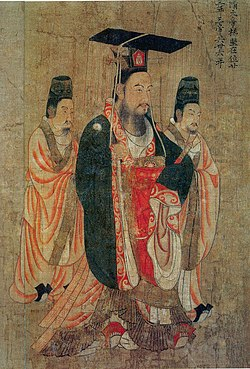
Yang Jian (楊堅) was born on 21 July 541 AD and became one of China’s most influential leaders as the founding Emperor Wen of Sui (隋文帝) of the Sui dynasty. After rising through the ranks of the Northern Zhou government, he seized power in 581 AD and established the Sui dynasty, bringing an end to decades of fragmentation following the collapse of earlier dynasties.
Over the next several years, Yang Jian consolidated his authority and pursued a campaign to unify the country. By 589 AD, his forces had defeated the Chen dynasty in the south and brought all of China under central rule for the first time in nearly three centuries. This reunification marked a major turning point in Chinese history and laid the foundation for the prosperity of later dynasties.
During his reign, Emperor Wen promoted major reforms to strengthen the state, including launching the construction of the Grand Canal — a vast waterway that later linked northern and southern China, boosting economic integration and communication. He also encouraged the spread of Buddhism as part of his effort to unify cultural and intellectual life across his empire.
He 何 (Hé)
Origins
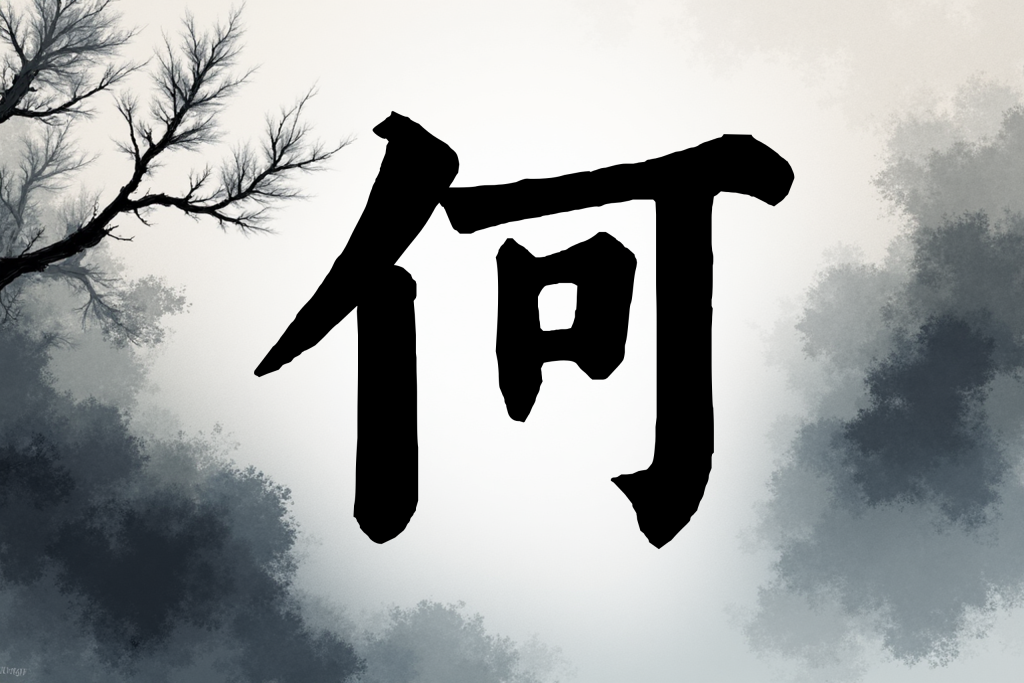
The surname He (何), established by the Warring States period (475–221 BC) is a common Chinese name with several possible origins. It may derive from ancient place names (fiefdoms) or from descendants of early clan leaders who adopted He as a family name, often to distinguish their lineage within early Zhou or pre-Zhou aristocratic structures.
- He appears in the Hundred Family Surnames and has remained a solidly widespread name in both northern and southern China.
- Unlike some surnames tied to a single kingdom or dynasty, He’s multiple origin strands illustrate the complex evolution of surnames in early Chinese society.
Famous Person: He Yan (何晏)
He Yan (何晏), born around 195 AD and died in 249 AD, was a Chinese philosopher and government official during the Three Kingdoms period in the state of Cao Wei. He was the grandson of a prominent Han Dynasty general and, after his father’s early death, grew up as a stepson in the powerful household of warlord Cao Cao, giving him early access to elite education and political life. He Yan gained a reputation for his intelligence and scholarship.
Although initially passed over for office by Cao Wei emperors, he eventually became Secretary of Personnel under the regent Cao Shuang, a position that allowed him to influence government appointments. His life came to a tragic end in 249 AD, when a coup by the Sima family ousted Cao Shuang’s faction and led to He Yan’s execution along with other loyal officials.
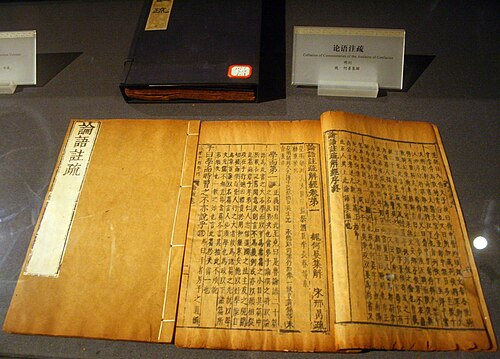
He Yan is best known for his role in the development of Xuanxue, a philosophical movement that blended Daoist and Confucian thought, seeking deeper metaphysical understanding of ideas such as non‑action (wuwei) and the nature of being. His commentaries on classic texts like the Analects were influential for centuries, shaping intellectual thought long after his death.