
Transcendence of Getai Over the Years.
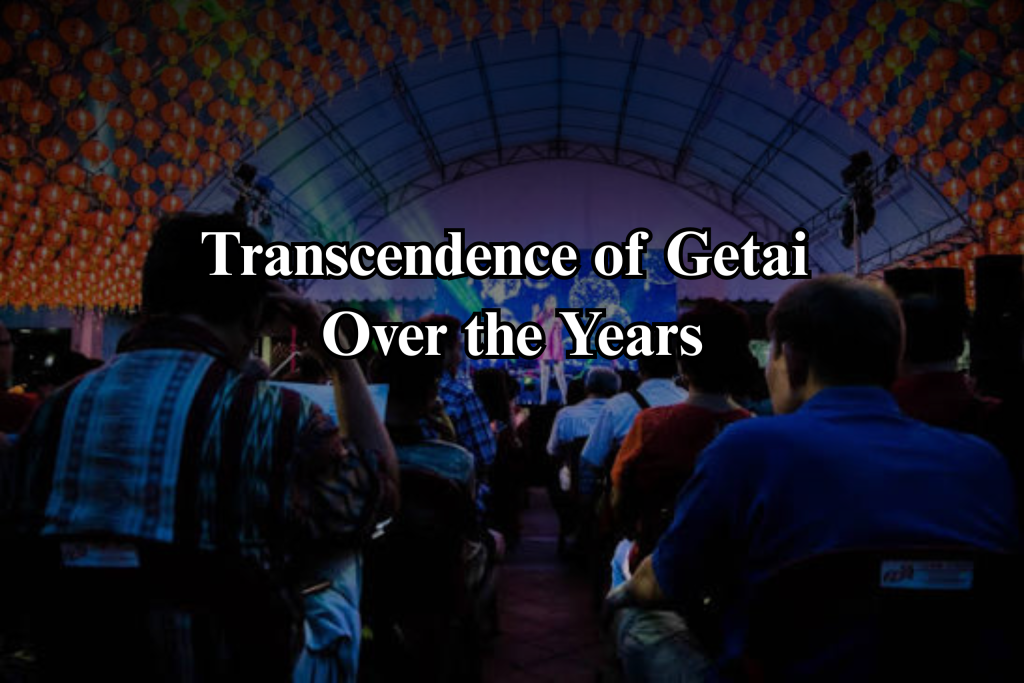
During the seventh lunar month, temporary stages appear in open fields, carparks and neighbourhood spaces across Singapore. As night falls, singers in glittering costumes perform beneath bright lights, while hosts entertain the crowd in Mandarin and Chinese dialects.
These lively performances are known as getai (歌台), literally meaning “song stage”, and have become one of the most recognisable features of the Hungry Ghost Festival in Singapore.
Although getai is now closely associated with the festival, it did not begin as a religious performance. Singapore’s early getai developed as a form of popular entertainment. According to the National Heritage Board, the first known local getai troupe, Da Ye Hui(大夜会), was established at New World Amusement Park in 1923.
During the Japanese Occupation, these performances offered audiences a relatively simple form of escape from difficult wartime conditions. Early getai focused heavily on singing but gradually expanded to include live bands, dance, comedy, acrobatics and dramatic performances.
Getai entered a period of strong growth after the Second World War. Singapore’s entertainment industry flourished during the 1950s, and amusement parks such as New World, Great World and Happy World became major centres of nightlife and popular entertainment.
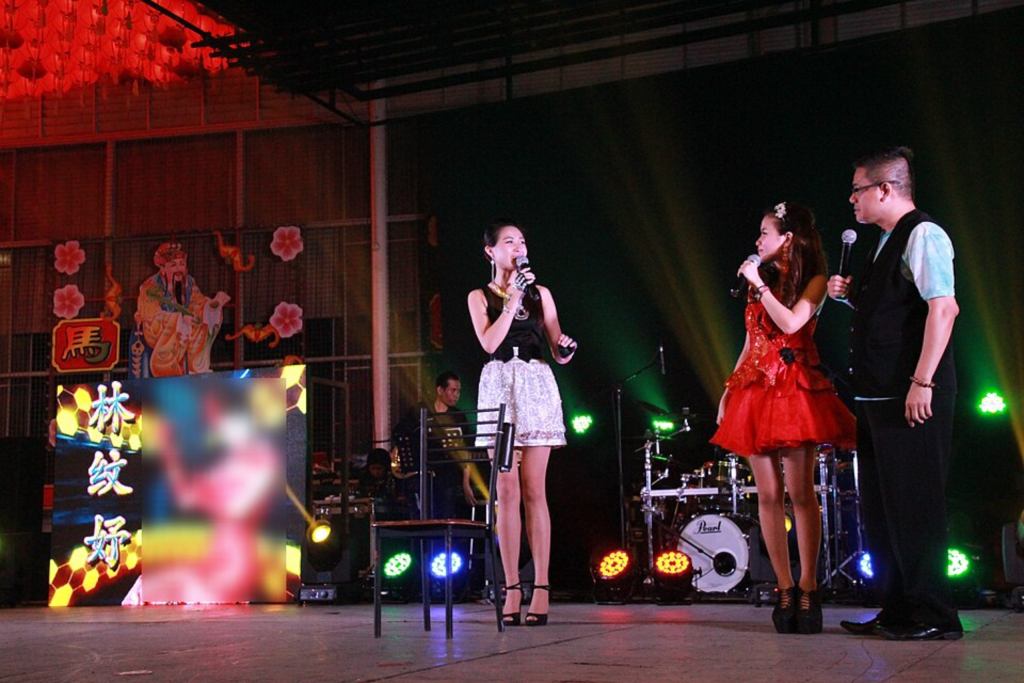
The entertainment landscape began changing during the 1960s. Television increasingly brought entertainment directly into people’s homes, while the major amusement parks gradually lost their former prominence. Thus, getai adapted by moving beyond the amusement parks.
Performances increasingly appeared at temples, neighbourhood celebrations and temporary stages erected in Singapore’s growing housing estates. By the 1970s, getai had become a familiar sight at open-air venues in HDB neighbourhoods and was firmly associated with seventh-month celebrations.
Before modern getai became common during the Hungry Ghost Festival, Chinese opera, often called wayang in Singapore, and puppet shows played an important role in seventh-month celebrations.
These performances were presented not only for the people gathered in the neighbourhood, but also for the spirits traditionally believed to be roaming the world of the living during the seventh lunar month.
As popular musical tastes changed, audiences increasingly preferred the shorter and more familiar format offered by getai. Songs, comedy, colourful costumes and direct interaction between performers and audiences gradually took the place of many of the longer dramatic performances associated with traditional opera.
This became particularly significant after the launch of the Speak Mandarin Campaign in 1979. As part of the wider promotion of Mandarin, dialect programmes on radio and television were progressively phased out, reducing the presence of languages such as Hokkien, Teochew and Cantonese in mainstream broadcasting.
Getai, however, remained a space where dialect performances could continue.
Some researchers therefore regard getai as an important cultural platform for the preservation and continued public use of Hokkien in Singapore. The mixture of dialect songs, humour and hosting styles also gives older audiences a connection to forms of entertainment that were once far more common in everyday life.
At the same time, getai has never remained completely fixed in the past.
Hokkien and Taiwanese songs remain central to many performances, alongside Mandarin and Cantonese favourites. Modern shows may also incorporate contemporary Chinese pop and even Korean pop music, allowing getai to adapt to the tastes of different generations.
Despite these changes, the spiritual purpose of seventh-month getai remains important.
During the Hungry Ghost Festival, offerings of food, incense, candles and joss paper are made to ancestors and wandering spirits. Getai forms part of the wider tradition of welcoming, appeasing and entertaining these unseen visitors.
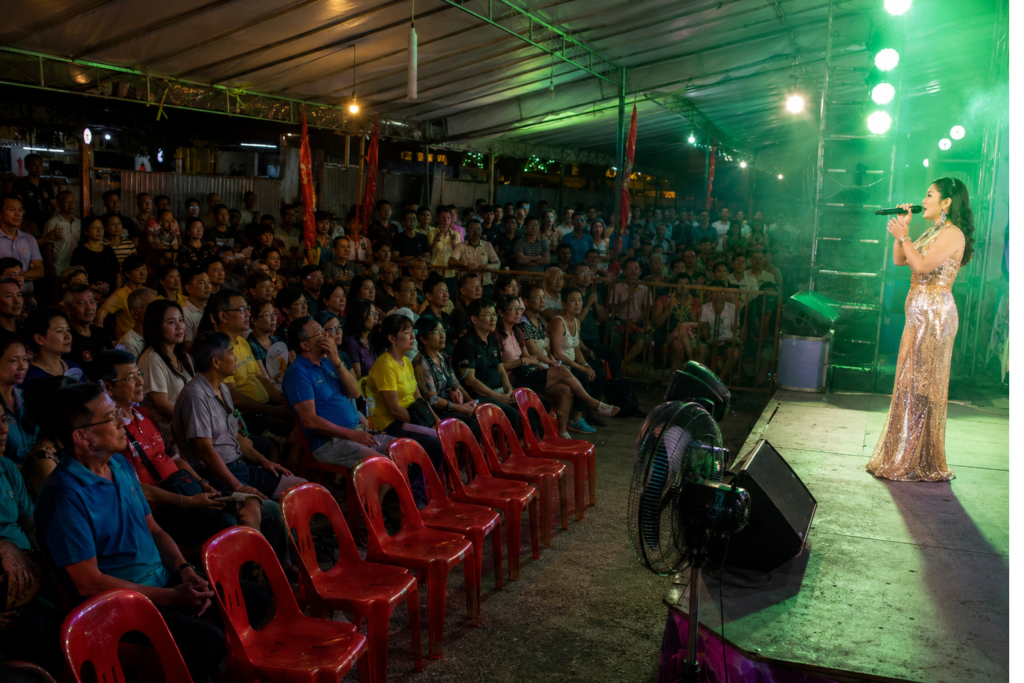
This is also why the front row of seats at a seventh-month getai performance is traditionally left empty.
These seats are reserved for spirits, who are regarded as honoured guests of the performance. Members of the public may sit behind them, but occupying these seats is traditionally avoided out of respect.
The empty chairs are therefore more than an unusual sight. They serve as a visible reminder that, within the beliefs surrounding the Hungry Ghost Festival, the performance is not staged solely for its human audience.
Getai performances are also commonly held alongside other neighbourhood Zhong Yuan activities. Temporary tents may contain altars, incense and food offerings, while community dinners and auctions may help raise funds for future celebrations, temples or charitable causes.
In this setting, the getai stage becomes part of a larger communal observance rather than simply an outdoor concert.
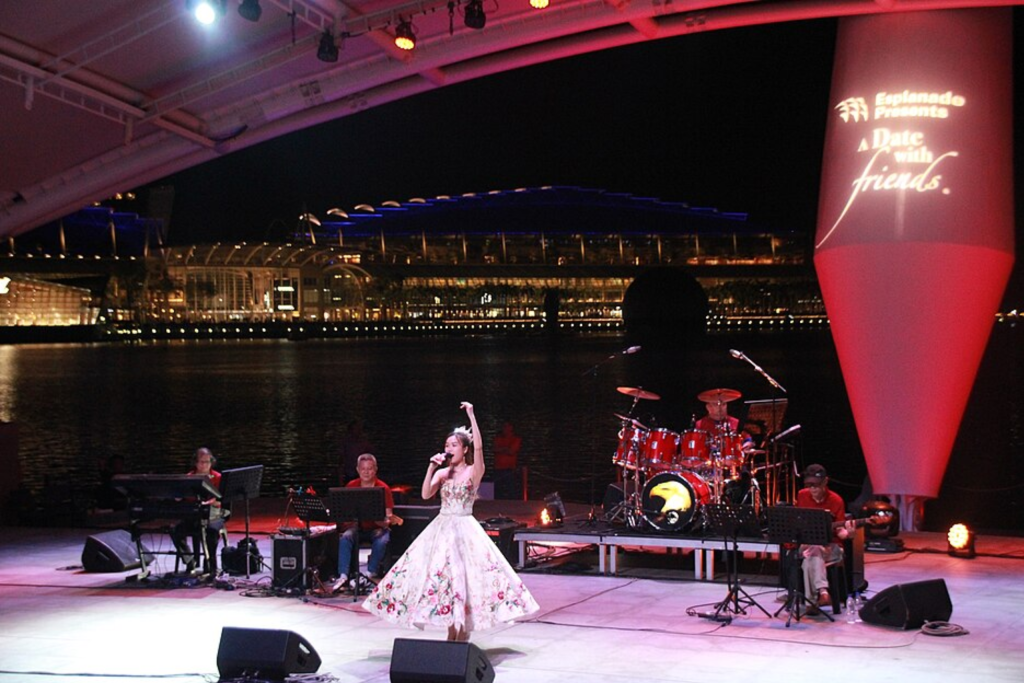
Modern getai can look considerably different from the temporary stages of earlier decades.
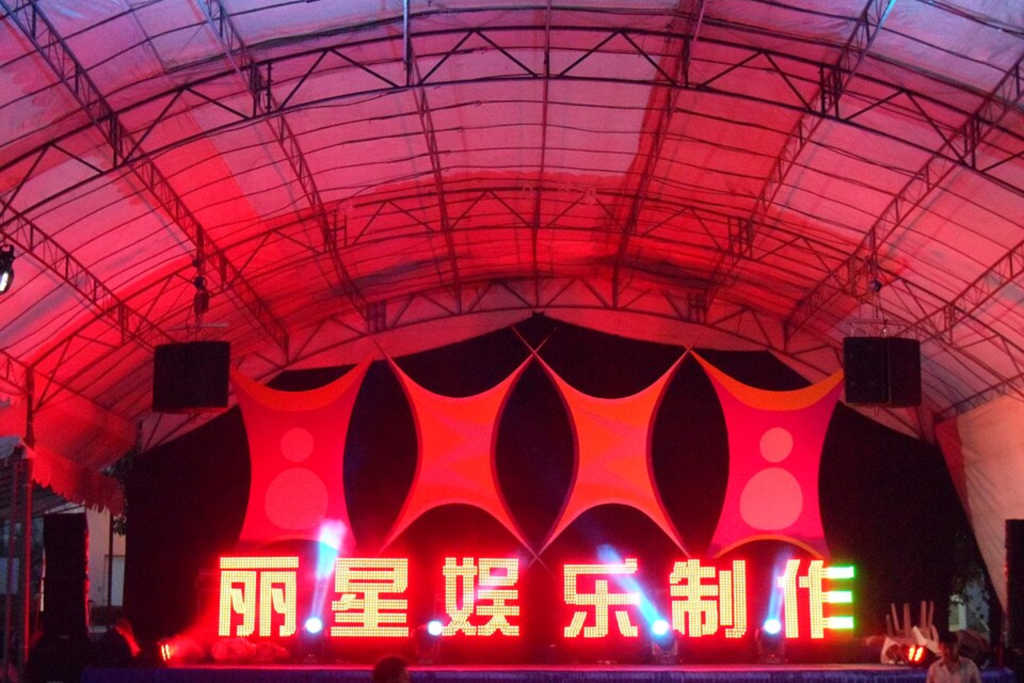
Production companies have introduced increasingly sophisticated sound systems, LED displays, digital backdrops and concert-style lighting. Singapore’s National Heritage Board describes contemporary getai as being characterised by vibrant stages and LED lighting, while the Singapore Chinese Cultural Centre notes that some modern productions use equipment comparable to that found at pop concerts.
Technology has also changed how audiences experience getai.
Even before the COVID-19 pandemic, some organisers had begun broadcasting performances through social media. The pandemic accelerated this transformation when restrictions made traditional large-scale outdoor performances impossible.
In 2020, performers began appearing in studios while shows were streamed through Facebook and YouTube. Virtual getai reached viewers well beyond Singapore, with audiences reported in countries including Australia, Germany and the United States.
Although physical performances later returned, livestreaming demonstrated that a tradition once closely tied to a particular neighbourhood stage could also reach audiences around the world.
The seventh lunar month remains one of the best periods to experience getai in Singapore, with performances taking place throughout neighbourhoods across the island.
Several upcoming 2026 performances include:
- 15 August, 7:00pm: Open field beside Blk 3025 Ubi Road 3
- 16 August, 7:00pm–10:15pm: Clementi 448 Market & Food Centre
- 17 August, 6:30pm–8:30pm: Chinatown Garden Link Bridge
- 21 August, 7:00pm, 8:15pm and 9:30pm: Getai Fun Night at the DBS Foundation Outdoor Theatre, Esplanade
Neighbourhood getai schedules can change, so visitors should check the latest organiser or community listings before travelling to a performance.